Mounting and Installation
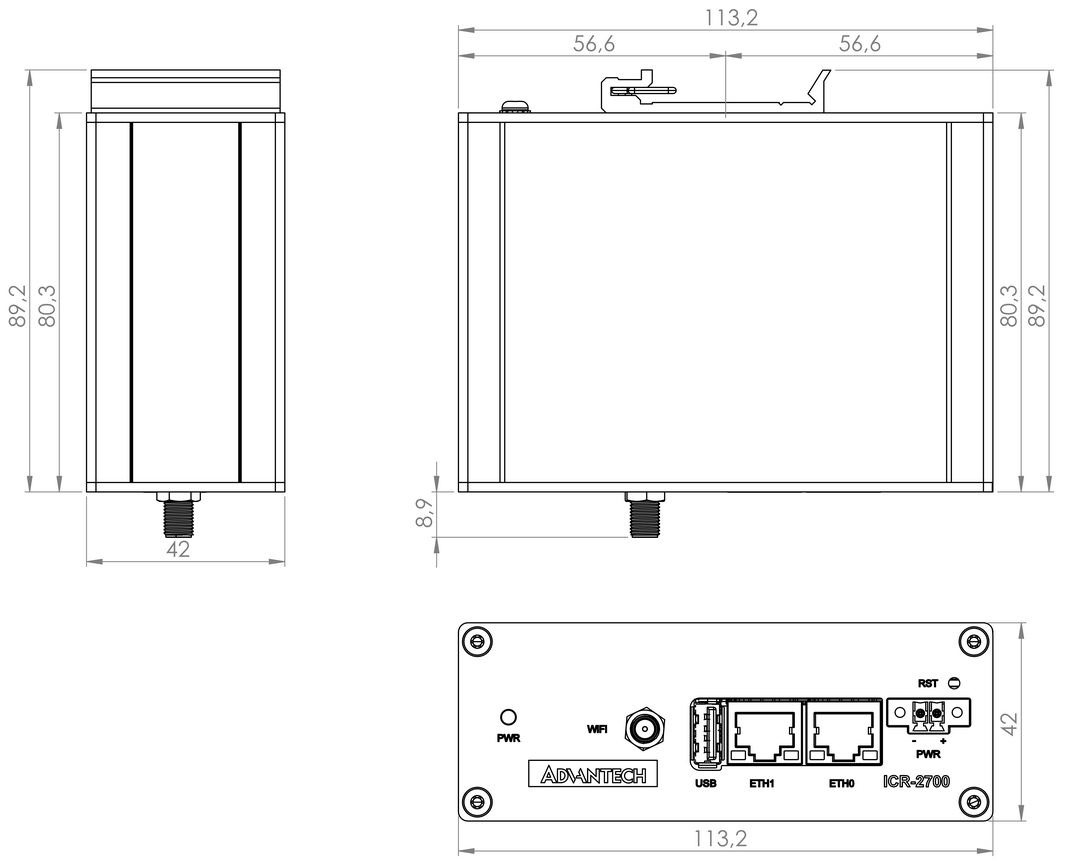
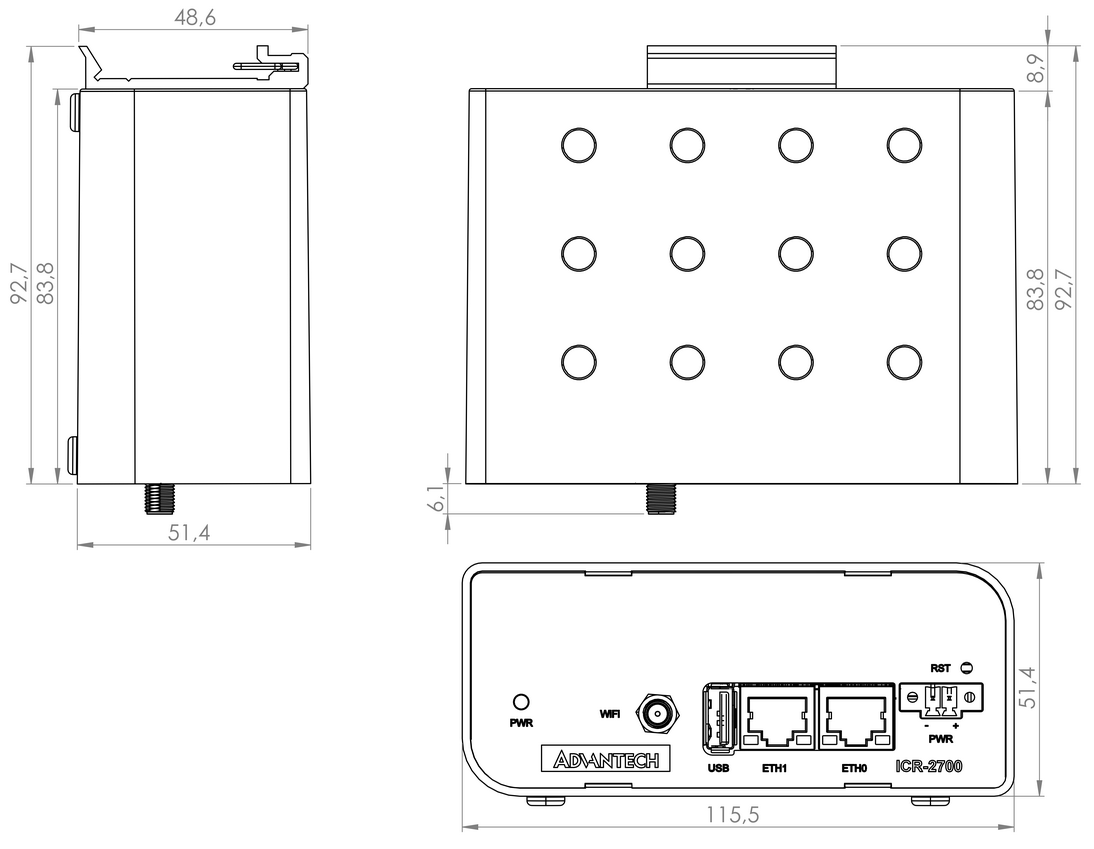
Product Dimensions
Refer to the diagrams below for detailed measurements (in millimeters).
Variant with Metal Box
Variant with Plastic Box
Mounting Options
The router can be installed in the following ways:
- On a Flat Surface: Place the router on a stable, flat surface.
- On a DIN Rail: Mount the router using the metal DIN rail clip in compliance with EN 60715 standards. Refer to the DIN Rail Mounting section for additional details.
For most applications involving a built-in router within a switchboard, consider the following environmental types:
- Non-public industrial environments: Low voltage with high interference.
- Public environments: Low voltage without high interference.
For both cases, mounting the router to a switchboard eliminates the need for additional immunity or EMC-related examinations under EN 61439-1:2011.
Guidelines for Mounting
In compliance with EN 61439-1:2011, observe the following assembly instructions when mounting the router inside a switchboard:
- When using whip antennas, maintain a minimum distance of 6 cm from cables and metal surfaces on all sides to minimize interference.
- Use a lightning conductor for external antennas mounted outside the switchboard.
- When mounting the router on sheet-steel, use a cable antenna.
- Bundle power supply and data cables, ensuring:
- The combined cable length does not exceed 1.5 m.
- Surge protectors are installed if data cables exceed 1.5 m or run toward the switchboard.
- Data cables are not bundled with mains voltage cables (230 V/50 Hz or 120 V/60 Hz).
- Leave sufficient space between connectors for easy cable handling.
- Use an earth-bonding distribution frame to properly ground the router's grounding screw.
DIN Rail Mounting
Tips
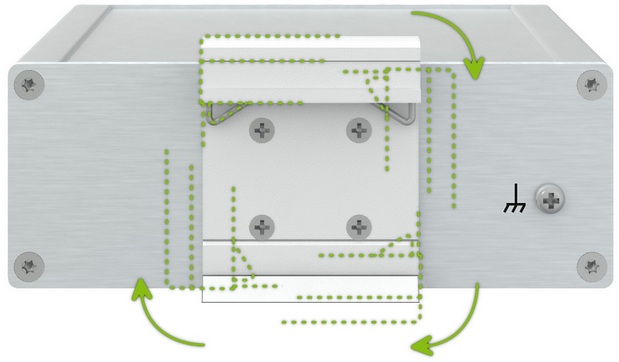
The DIN rail clip is the same for the metal and plastic router box. It differs only by the screws used.
The DIN rail clip is suitable for DIN rails compliant with EN 60715 only. There are four possible clip positions as shown below.
Warning
Tighten the DIN rail clip screws to a maximum torque of 0.4 Nm.
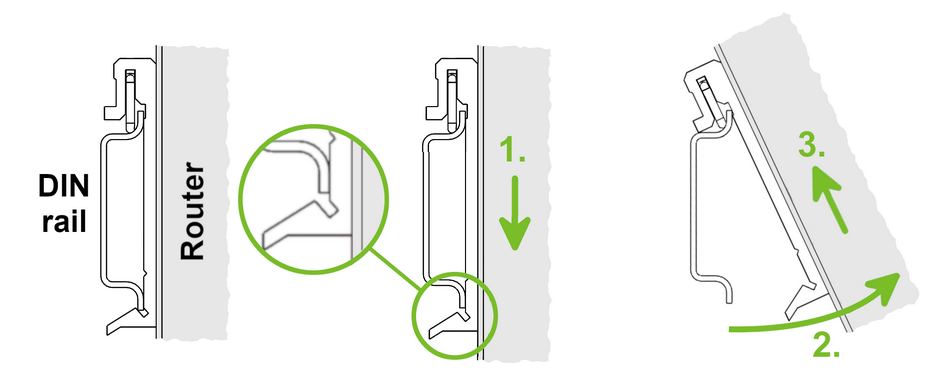
To remove the router:
- Push down lightly on the router until the bottom part of the DIN rail clip disengages from the rail.
- Tilt the bottom part of the router away from the rail to release it.